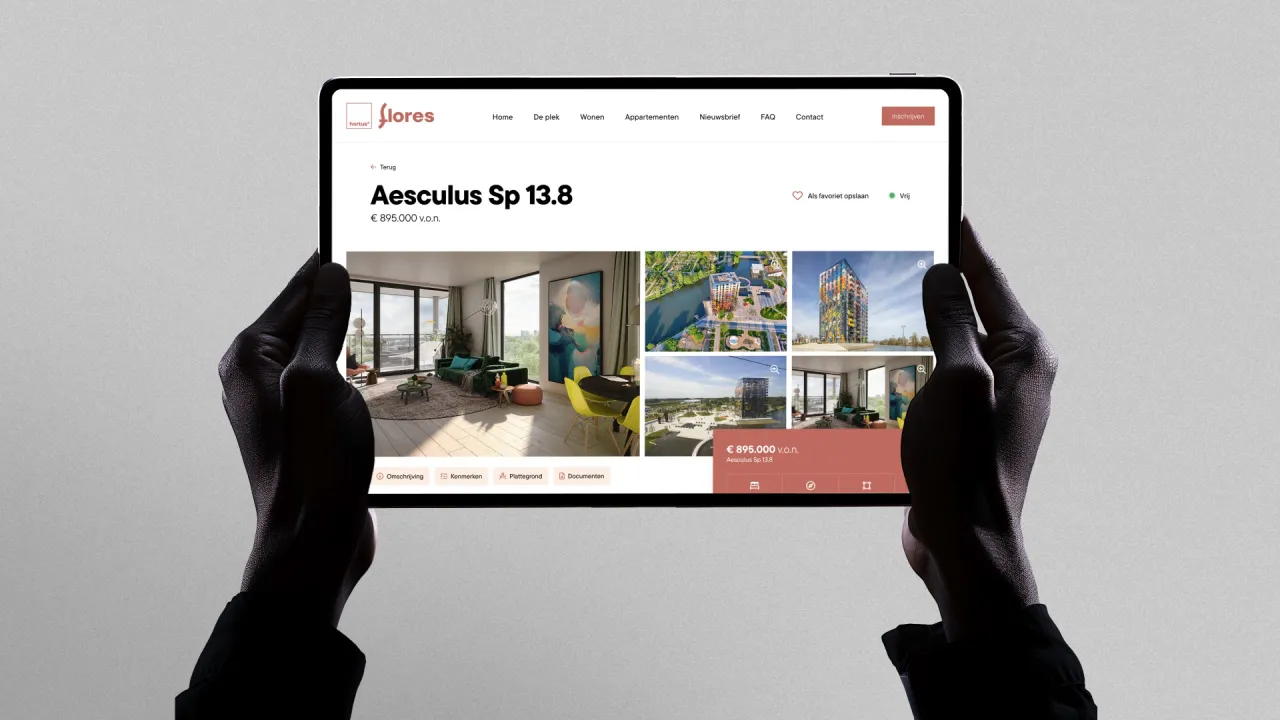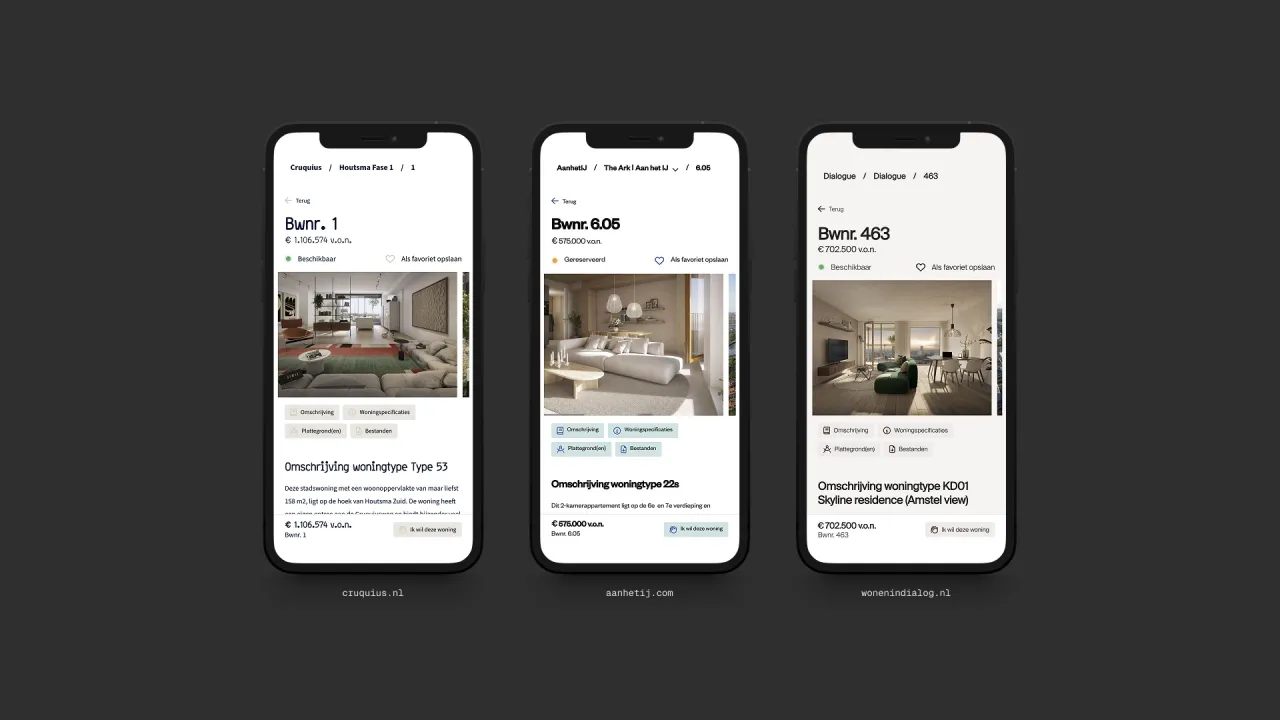

Unique house finders for each project are becoming quite expensive. We request ROX to build a standardized system that we can use to quickly whip up a new house finder.
Good call, we have quite some experience with this.
— but each one has its own identity.
Amvest builds neighborhoods across the Netherlands, each with its own brand. But their house finder was scattered across projects, inconsistent, and expensive to maintain. Custom builds for every launch meant more complexity, more cost, and harder to keep data in sync.
They needed one system that could work everywhere, embedded into any project site, adapted to fit, without starting from scratch each time.
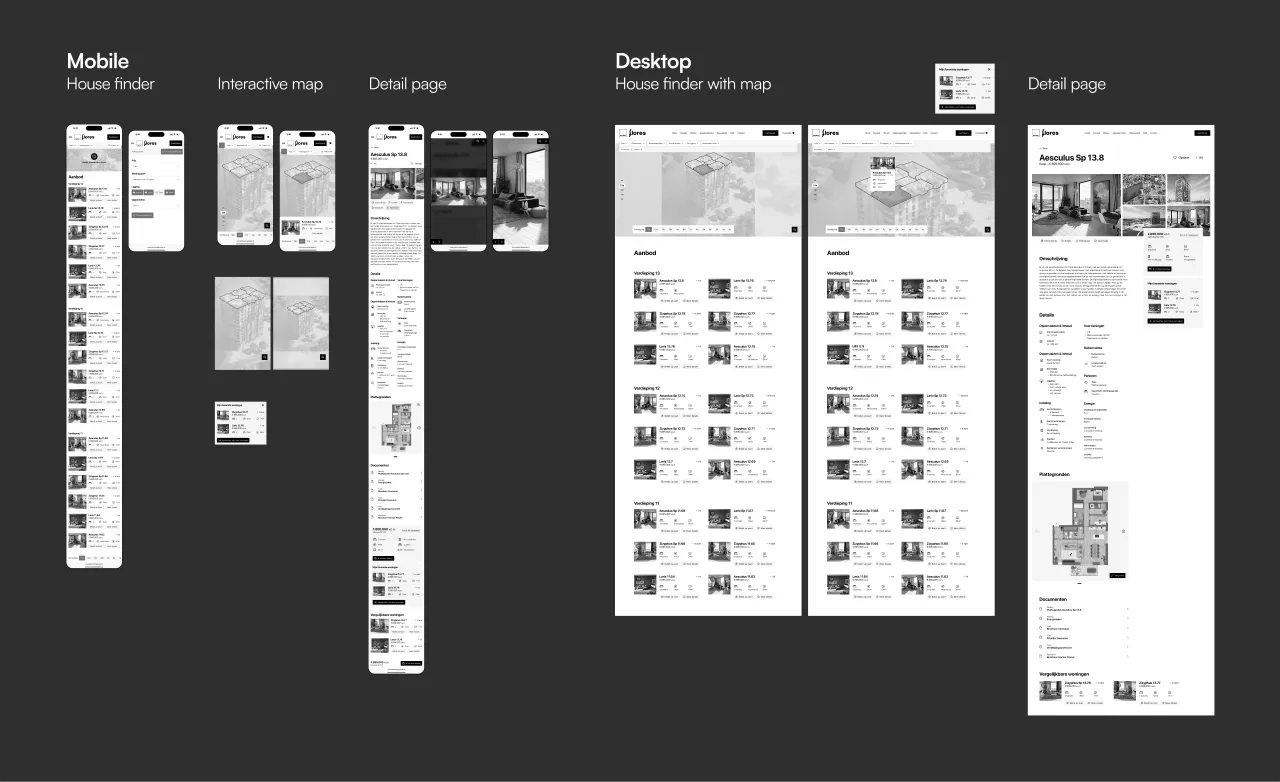
We built it: themeable enough to match each project, structured enough to stay consistent, and designed to improve with each release.
The result: deployed across multiple projects, reduced support requests, and Amvest in control of their own setup.
ROX is a digital agency located in Rotterdam that specializes in helping companies with their digital growth. Through a combination of strategic advice, polished designs and custom software development, they create web applications that are future-proof, scalable and improve work efficiency.
Discover ROXI joined from the first kickoff meeting and stayed through multiple releases, leading research (comparative analysis of existing house finders), translating findings into design criteria, and designing the full UI system and component library. The team was lean: my boss (CEO/Strategist) led discovery and strategy alongside me, while I owned all design decisions and worked closely with developers on implementation.
An iterative project across multiple releases. The first release focused on single-building visualization with floor navigation. Subsequent releases added multi-building support, refined filtering, distinguished rental vs. sales flows, introduced neighborhood amenity hotspots, and incorporated user feedback into continuous improvements.
Where embeddable meets adaptable and neither bends.
Unique house finders for each project are becoming quite expensive. We request ROX to build a standardized system that we can use to quickly whip up a new house finder.
Good call, we have quite some experience with this.
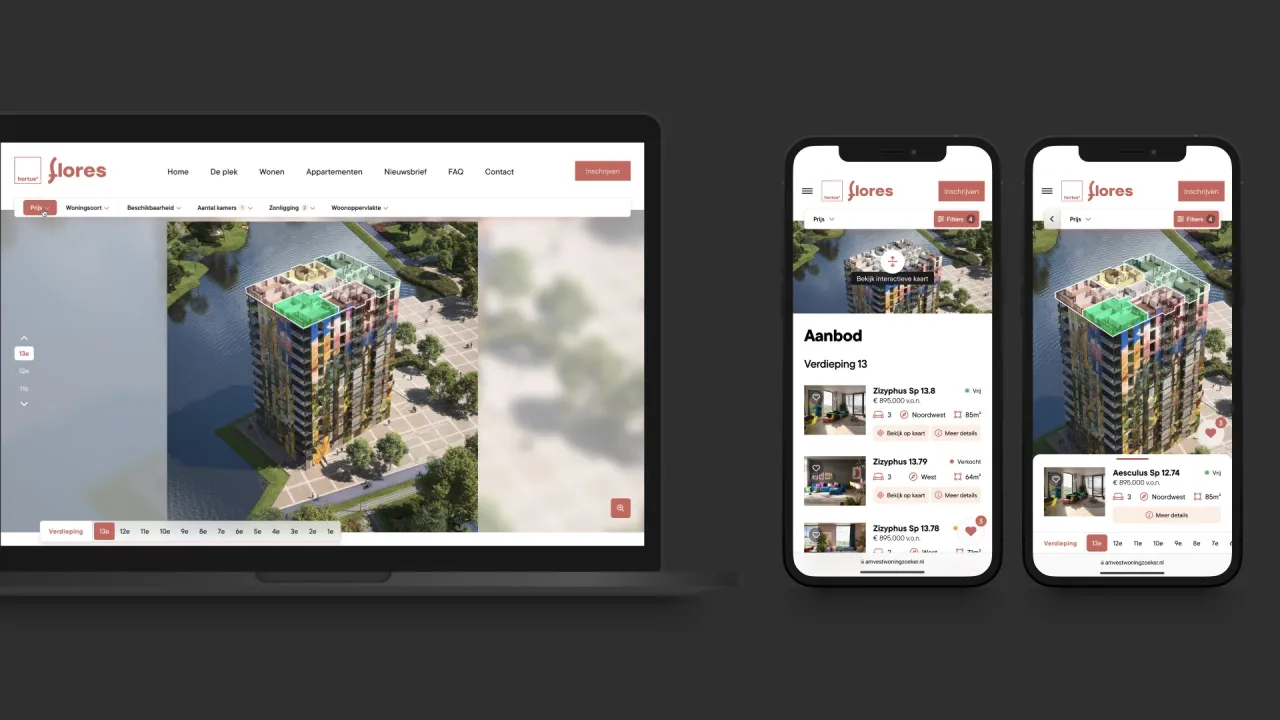
As Amvest is still transitioning and won't have all the data required in their new system, it's impossible to build the house finder as a direct connection. We need another layer in between.
That's quite some additional work and this will cut into budget for design. Let's start with an MVP and iterate on that. This will give us real user insights as well.
Every newly built project has its own website design. The new house finder needs to blend in everywhere.
Let's do a session to go through several house finders and identify what other requirements there are.
Before a single wireframe, we ran a comparison session, dissecting existing house finders with Amvest, finding what worked and what didn't, even in the worst examples. The goal: stop chasing a mythical "perfect solution" and start identifying real trade-offs. What emerged weren't wishes; they were requirements grounded in reality.
These criteria became our measuring stick.
The work speaks. Here's what it said.
Centralized data management meant consistent pricing and availability across all channels. Fewer confused visitors, fewer manual fixes.
No developer needed for setup. They manage inventory, configure projects, and iterate on their own timeline.
I can do that myself! I've gotten quite handy at this.
– Client on filling a house finder before launch